
Hospitality
Several restaurant brands, one chain for access
A hospitality group with several brands and email domains runs access for more than 600 employees automatically from HR. Whoever starts tomorrow is already set up tonight.

- employees under management
- 600+employees under management
- changes a month, handled automatically
- around 120changes a month, handled automatically
- manual account requests per location
- 0manual account requests per location
Six brands, and a different way of creating an account every time
A restaurant group with several brands is really several businesses under one roof. Each brand has its own name, its own email domain, its own locations and its own way of working. Guests never notice. The people behind the scenes do, because they move between locations and sometimes between brands, and every move had to be recorded in a system somewhere.
In practice that meant a new colleague was created by whoever had time that day, in the domain that seemed most obvious to them, with the groups the previous new colleague had been given. The result showed up on the first shift: someone without email, or with the mailbox of a location they had never worked at.
And hospitality sees a lot of turnover. For every ten people who join, a few also leave. Every account left open after someone left was a door left open, and nobody had the overview to see which doors those were.
What they wanted: HR decides, the systems follow
The group wanted to be rid of the idea that access is something you arrange per person. Someone hired in the HR system for a role at a location of a brand should automatically get the right account, the right domain, the right groups and the right shared mailboxes from that. And someone who leaves in HR should automatically disappear everywhere from that.
The rule is simple. Carrying it out is not, because every brand fills it in differently. That interpretation had to be set down properly once, and then never again per person.
With several brands and hundreds of moves a year, access is only sustainable if the system does it.
What was built: one configuration that knows every brand
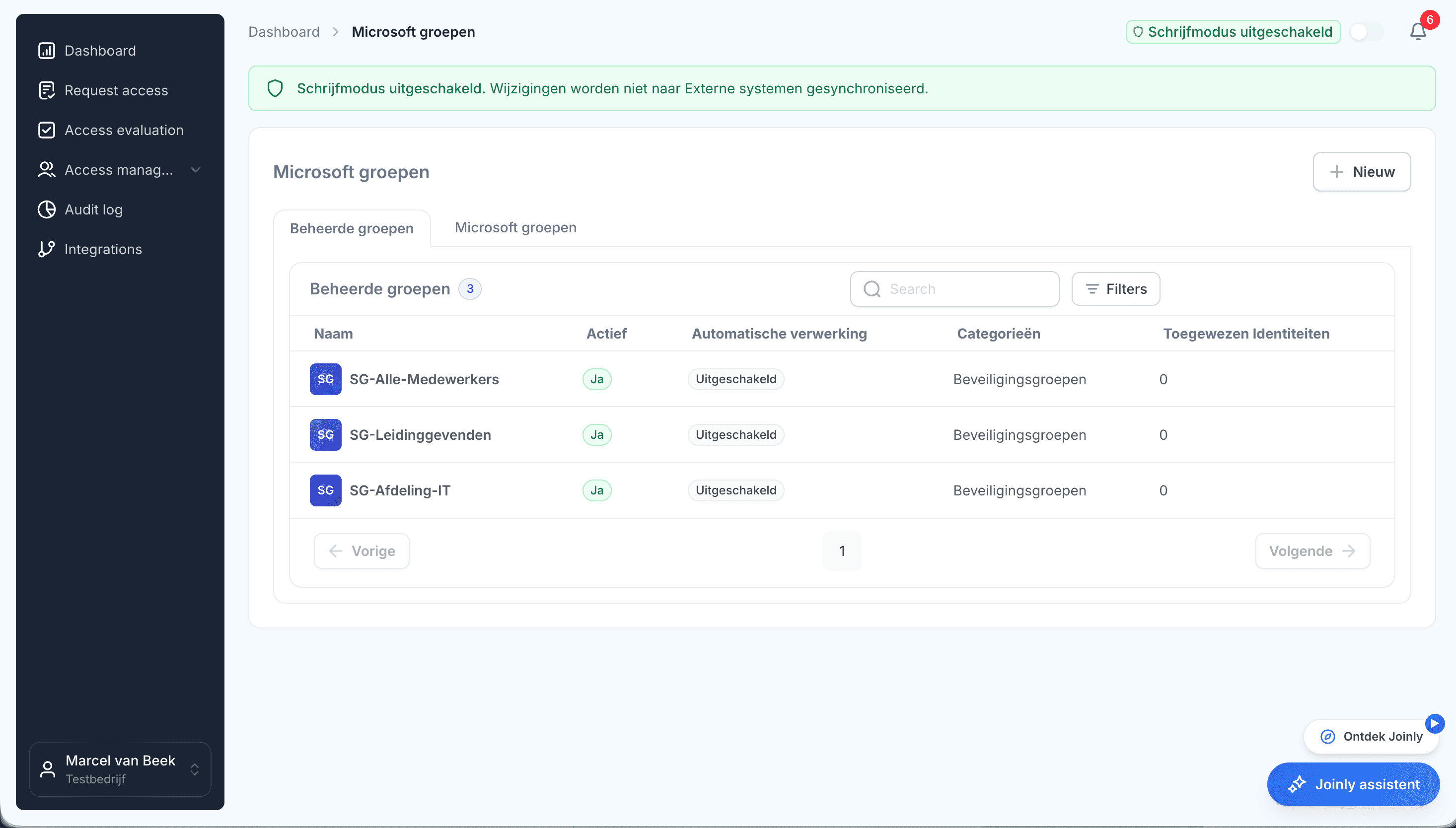
Joinly reads the HR changes and translates brand, location and role into what belongs with them. The email domain follows from the brand, the Microsoft groups and Teams from the location and the role, and the shared mailboxes from the location. Nobody has to make those choices anymore; they have been made, once, for the whole group.
A transfer is therefore one field in HR. When someone moves from one location to another, or from one brand to another, Joinly adds the groups, Teams and mailboxes of the new place and removes those of the old one. Where a ticket used to be needed, and where clearing up the old access was left undone, the change now handles itself.
Offboarding works the same way. An end date in HR closes the account on that day, revokes the licences and removes access to shared mailboxes, across every brand at once.
Today: ready before the first shift, and closed after the last
A new employee has an account, email and access on the day the rota starts. A location manager does not have to request anything for it, and IT does not have to do anything for it. At around a hundred and twenty changes a month, that is work that used to come back every week.
What no longer happens matters more. No accounts stay open for people who left months ago, and nobody sits on the mailbox of a location where they no longer work. The group knows at any moment who can access what, because the answer comes from HR and not from the memory of whoever created the account back then.
What you can count on
- No vendor lock-inYour identities and your configuration stay yours.
- Your data out whenever you wantYou can export your data at any time.
- Standard SLAOur standard SLA is available on request.
- Support during implementationOur specialists set it up together with you.
- ISO 27001 certifiedInformation security to an internationally recognised standard.
Customer stories
More customer stories
Organisations with a similar question, in a different sector.

Healthcare
750+ care workers with the right access, with no waiting
750+ employees under management
Read the story
Public sector
Public money, demonstrably managed access
around 210 employees
Read the story
Transport
More than 550 people on the road and in the warehouse, one access process
more than 550 employees
Read the story
Want to see what this means for your organisation?
Book a 30-minute demo. We walk through your own situation: which HR system you use, which systems need to follow and what can be automated first.
Book a demo