
Aviation
The basis in order, in a sector where everything has to be demonstrable
An aviation maintenance company started at the foundation: accounts that follow the employee records, for more than a thousand people. The rest builds on that.

- employees
- more than 1,000employees
- changes a month, handled automatically
- around 90changes a month, handled automatically
- source for who works there
- Onesource for who works there
In the air everything is recorded, on the ground the records lagged behind
In aviation, being able to demonstrate things is part of the job. Everything done to an aircraft is recorded: by whom, when and under which authorisation. Anyone working in that world is used to being able to show how something went.
For the accounts that work is recorded with, that held less. At this maintenance company, with more than a thousand employees across several sites, accounts were created, updated and closed by hand. At those numbers that means a constant stream of requests, and a backlog that is never fully cleared. A new colleague not yet in the systems on day one, and a departed colleague still in them weeks later, were both far from exceptional.
What they wanted: one reliable source first, then the rest
The company did not want to start with the hardest part. Roles, role profiles and cleaning up permissions that have piled up over the years are valuable, but they only work if the layer beneath is right: one place that knows who works there, in which role and at which site.
So the first step was deliberately the lifecycle. Joining, changing role or site and leaving, straight from the HR system, without anyone retyping it.
Roles and reviews only work if the layer beneath them is right. So it starts with one source that knows who works there.
What was built: accounts that follow the employee records
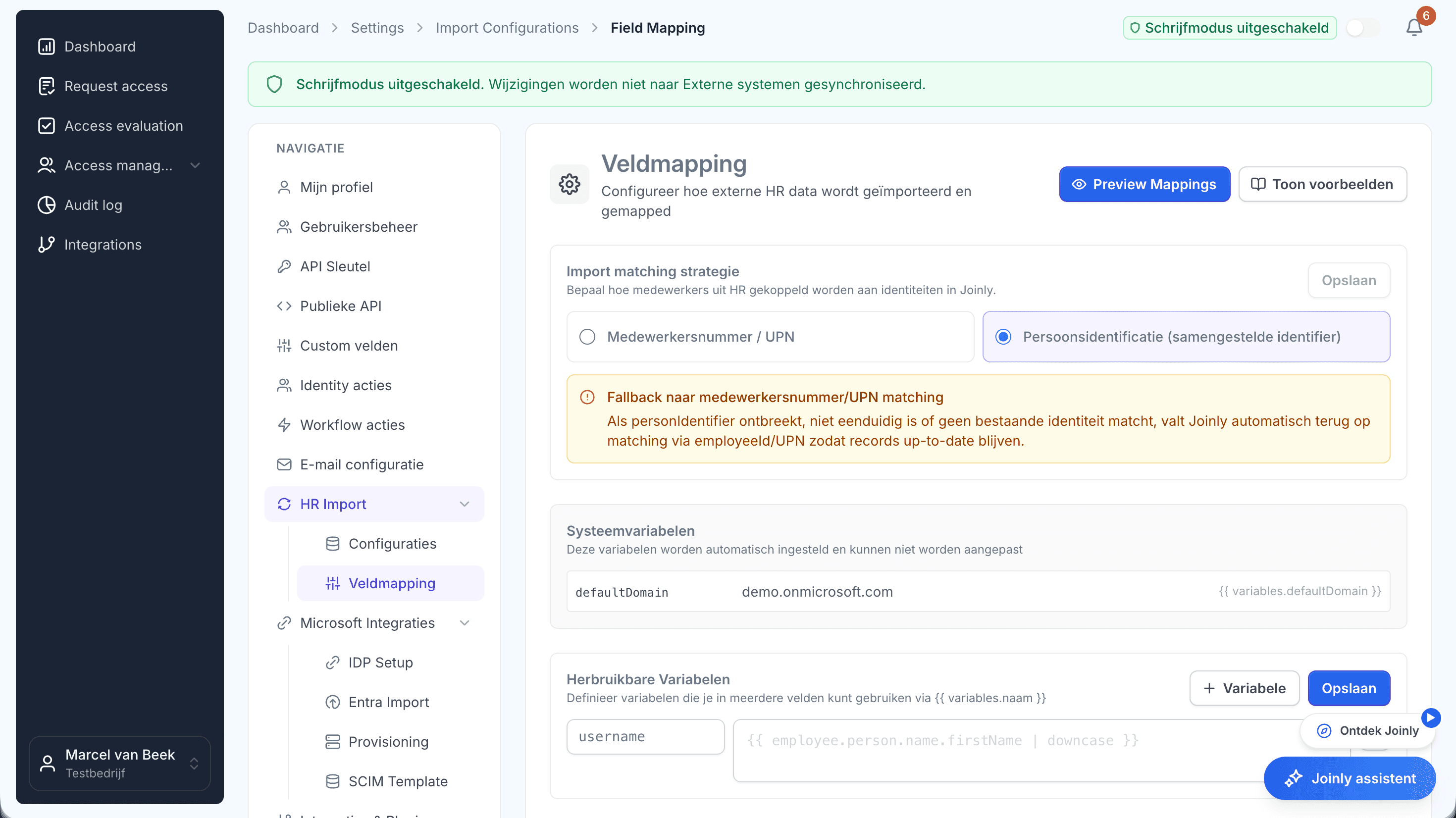
Joinly reads the changes from the HR system and turns them into accounts. A new employee is ready on the day the contract starts; a change of role or site is carried through automatically; on the end date the account closes.
Every step is recorded: which HR change was the trigger, what happened and when. With that, the question of who had an account when is no longer a search but a report.
Today: the foundation is there, the next steps are ready
Around ninety changes a month run without manual work, for more than a thousand people. The records no longer lag behind the staffing, and that is exactly what an organisation in this sector needs first.
On that basis the rest can follow: roles per job, cleaning up permissions from previous roles and a periodic review of who can access what. Those steps are planned. They only work because the source beneath them is now right.
What you can count on
- No vendor lock-inYour identities and your configuration stay yours.
- Your data out whenever you wantYou can export your data at any time.
- Standard SLAOur standard SLA is available on request.
- Support during implementationOur specialists set it up together with you.
- ISO 27001 certifiedInformation security to an internationally recognised standard.
Customer stories
More customer stories
Organisations with a similar question, in a different sector.

Energy
Access with approval, without the queue
200 employees under management
Read the story
Manufacturing
Office, engineering and workshop in one access process
over 200 employees
Read the story
Public sector
Access that follows the job, in an organisation that accounts for itself
more than 600 employees
Read the story
Want to see what this means for your organisation?
Book a 30-minute demo. We walk through your own situation: which HR system you use, which systems need to follow and what can be automated first.
Book a demo